
Applying for a Canadian visa can sometimes involve the help of parents, family, friends or organization. These situations are known as third-party transactions. Understanding how this works can help applicants avoid mistakes and ensure their application process remains smooth and compliant with immigration rules.
A third-party transaction occurs when a person or organization assists an applicant with part of the visa application process. This could include paying the application fee, or funding their purpose of travel. Canadian visa application permits the use of third-party transactions as long as it follows the official guidelines.
Ways Third-Party Transactions Are Used
1. Third-Party Payment of Visa Fees.
In many cases, the visa application fee can be paid by someone other than the applicant. For example, a family member, employer, or trusted friend may choose to cover the application costs using their credit card. Once the payment is completed through the official payment portal, a receipt is generated, can be uploaded to the visa application and kept for further documentation.
2. Proof of Funds (POF).
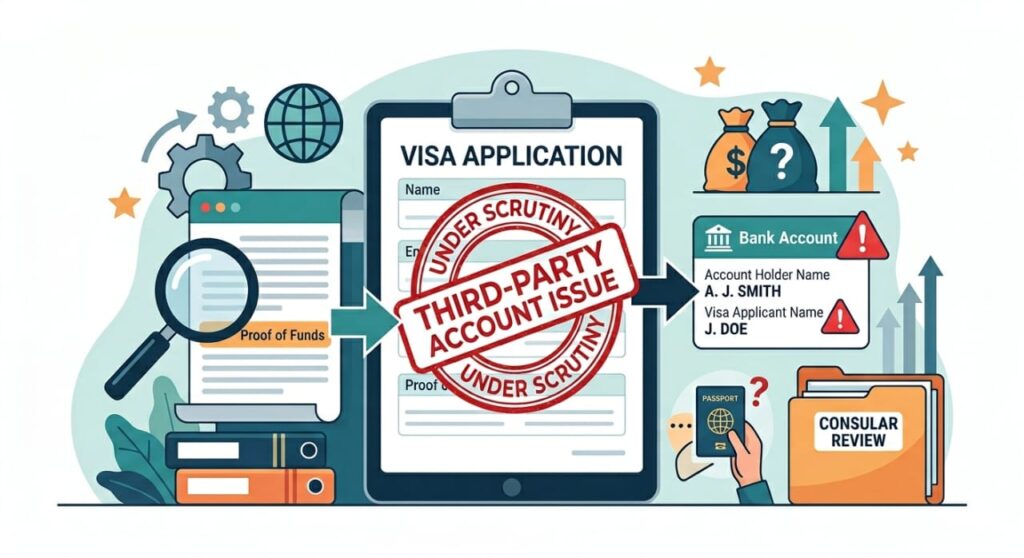
This requirement shows that the applicant has enough financial resources to support themselves during their stay in Canada. In some situations, applicants rely on third-party to support the application. A third-party transaction refers to funds that are provided or transferred by someone other than the visa applicant. This could be a family member, sponsor, employer, or business partner who helps demonstrate that the applicant has access to sufficient funds.
For Canadian visa applications, immigration officers must clearly see that the funds are legitimate, traceable, and available for the applicant’s use.
Acceptable Third-Party Financial Support
1. Sponsored Funds from Family Members
One of the most common forms of third-party financial support comes from close family members such as parents, siblings, or spouses. In this situation, the sponsor may transfer money into the applicant’s account or provide bank statements showing their ability to support the applicant.
Usually, this arrangement includes:
● A sponsorship letter explaining the financial support
● The sponsor’s bank statements
● Proof of the relationship between the sponsor and applicant
This helps immigration officers understand the source and purpose of the funds.
2. Gifted Funds
Another acceptable method is when funds are given as a financial gift. The sponsor transfers money to the applicant’s account without expecting repayment.
To support this type of transaction, applicants typically provide:
● A gift declaration letter
● Bank statements showing the transfer
● Identification documents of the person providing the funds
The letter should clearly state that the funds are a non-repayable gift meant to support the visa application.
3. Employer or Organizational Support
In some cases, applicants receive financial support from their employer, scholarship organization, or sponsoring institution. This is common for study permits, conferences, training programs, or temporary work arrangements.
Supporting documents may include:
● An official sponsorship letter
● Proof of payment or financial commitment
● Details explaining how expenses will be covered
While third-party assistance can make the application process easier, applicants should always remain involved and informed. It is important to keep copies of payment receipts, login credentials, and submitted documents.
Conclusion
Third-party transactions can be a valid way to demonstrate proof of funds for a Canadian visa application, especially when applicants receive support from family members, sponsors, or employers. However, the funds must be well documented and clearly explained to avoid complications during the review process.
When properly presented, third-party financial support can strengthen an application by showing that the applicant has reliable financial backing for their travel, study, or stay in Canada.